Auction Catalogue




 Create new list
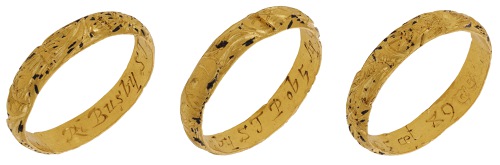
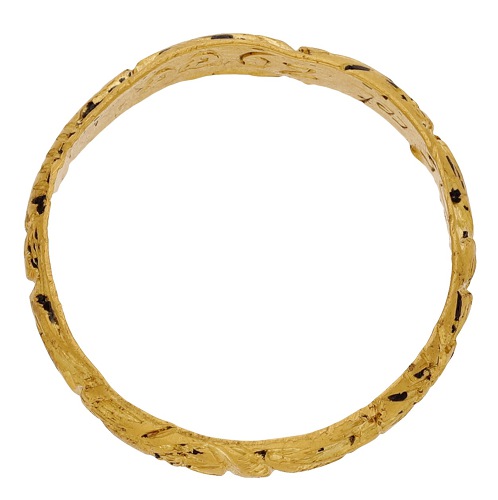
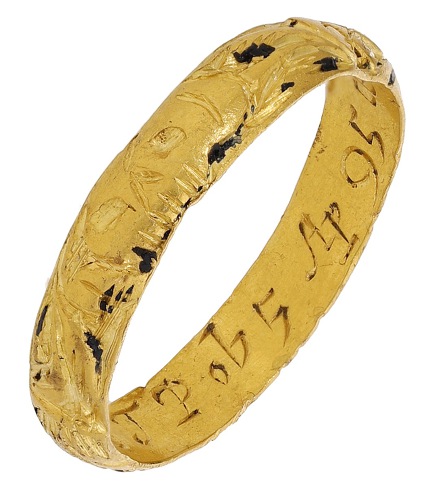
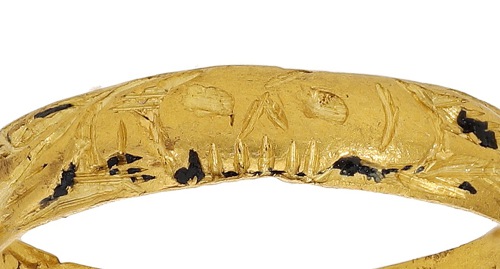
A late 17th century gold memorial ring for Dr Richard Busby, 1695, the gold band with engraved floral detail to the exterior with a memento mori skull motif to the front, traces of black enamel throughout; the interior inscribed in italic script ‘Ri Busby STP ob 5 Ap 95 aet 89’ and bearing a double struck maker’s mark ‘G’ within a shield punch, ring size P - Q, weight 3.26gm. £2,000-£3,000
This lot is a detectorist find and is registered with the The Portable Antiquities Scheme. The find number is LANCUM-88D4BB.

View Find on
PAS Website
This ring is a detectorist find discovered near Catforth, Lancashire in 2024. It is recorded on the Portable Antiquities Scheme database ref: LANCUM-88D488 and disclaimed as Treasure, ref: 2024 T890.
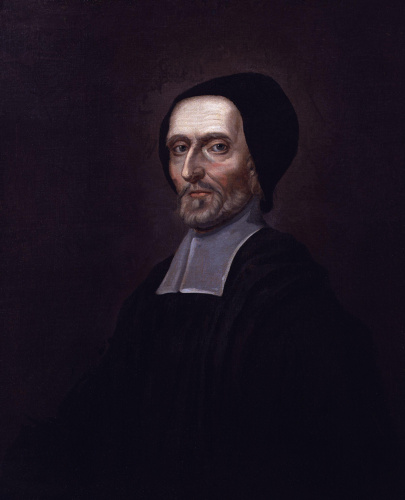
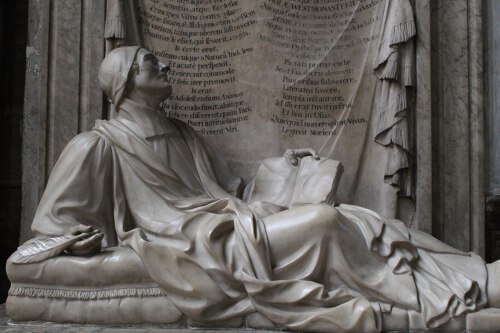
Interred under an impressive marble memorial within Westminster Abbey, Dr. Richard Busby, S.T.P. (Professor of Sacred Theology) 1606-1695, was “the most celebrated schoolmaster of his time”.
Born in 1606 in Lincolnshire, Richard Busby was educated as a King’s Scholar at Westminster School and Christchurch College, Oxford, before returning to his alma mater, Westminster School, as headmaster in 1638. Busby was an unapologetic Royalist who is said to have publicly prayed for King Charles I on the day of his execution, but he nonetheless survived the turbulence of the Commonwealth and the Restoration unscathed.
As the headmaster of Westminster school for 55 years he was known for his liberal use of corporal punishment (he once reputedly claimed to have birched 16 of the bishops then sitting in the house of Lords), but also his academic rigour, and for the loyalty he inspired from his students.
Students of his who went on to achieve public acclaim included:
philosopher John Locke;
architect and mathematician Christopher Wren;
poet, translator and playwright Robert Dryden (who dedicated one of his translations to Busby);
poet and diplomat Matthew Prior;
composer Henry Purcell;
and physicist Robert Hooke (who remained close to Busby - his diary records afternoons in his ex-school master’s company discussing the scientific discoveries of the day).
Ex Busby students Locke, Hooke and Wren were founding members of the Royal Society and historian Dr. Ray Schine argues that it was Busby’s techniques in teaching Latin and Greek - systematising the languages and exposing hidden rules (as exemplified in the Rudiments of Grammar (‘Grammatices Rudimenta’) he published) that lay the basis for the Royal Society’s systematic and analytical approach to the natural sciences.
Like many of his time, Busby, left money to various friends and acquaintances in his will specifically for the purpose “to buy rings in the remembrance of me”. These included “my very good friends the Lord Bishop of Rochester…to every of my Brethren the prebendaries…my Usher Mr Thomas Knipe…my assistant Mr Michael Maitre… And to the widow of my late brethren Dr. Owtram, Dr. Littleton, Dr. Gibbs and Mr Still” as well as each of the King’s Scholars at the school and the organist, choir master, choristers, vergers, sacrists, bell ringers, almsmen, officers and servants of the collegiate church (Westminster Abbey). The specific sums bequeathed for rings range from 5 guineas to 10 shillings a piece. Records in the archives at Westminster school record that 90 foliate rings were purchased for distribution, with 20 bearing a skull motif.
This ring was discovered close to the site of a Wesleyan Methodist chapel in Catforth, Lancashire, founded in the 18th century. Although later than Busby, one of the founders of the Methodist church, Charles Wesley (and his older brother Samuel), both attended Westminster school, providing a tantalising possible link to the find site.
“Lastly whatever fame the School of Westminster boasts, and whatever advantages mankind shall reap from thence, is principally owing to Busby and will be owing to him in all ages” as inscribed upon Busby’s tomb in Westminster Abbey.
Literature:
Russell Barker, G.F., Memoir of Richard Busby, with some account of Westminster School in the 17th century, pub. Lawrence and Bullen, 1895.
Share This Page