Article
2 October 2025
BRINGING THE BRITISH IRON AGE BACK INTO THE LIGHT
Paul Bancroft has been searching the fields and open spaces of Wiltshire with his metal detector for more than 40 years. “Each signal, each discovery, has been a reminder of the people who came before us and the stories they left behind in the soil,” he says.
His discoveries led to a passion for collecting – especially Iron Age coins – and he became captivated by their artistry and the light they shed on early British history.
Here he presents a collection comprising his finds and coins collected by a late friend over a lifetime collection. Together they span the entire Iron Age period across Britain and Gaul.
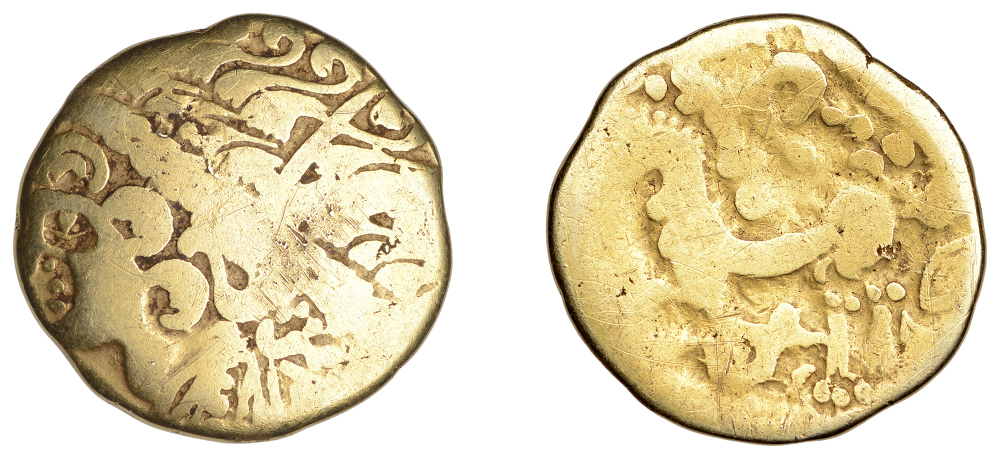
Early highlights include a c.150-75 BC gold stater of the Bellovaci, a Gallo-Belgic tribe who occupied the area surrounding the modern city of Beauvais. A broad flan of yellowish gold with a flamboyant laureate bust of Apollo left, with big hair, the reverse depicts a horse left, with charioteer above, and the trace of a rosette below. Lightly scuffed, the obverse is fine with a clear portrait, and reverse about so. The estimate is £400-600.
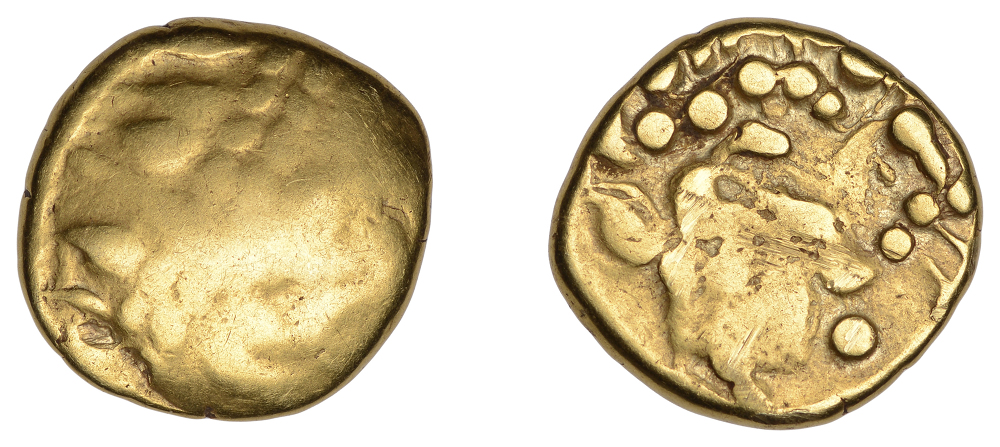
The Regni occupied a broad expanse of south east England. Here an uninscribed gold stater, of John Sills’ Insular type, depicts the devolved head of Apollo right, the reverse showing a sinuous horse right, with oval motif behind, and abstract rider above with pellets. One of the earliest regular British gold coins, which date from c.80-50 BC, it is of bold yellowish gold and extremely rare and fine. It has a guide of £200-260.
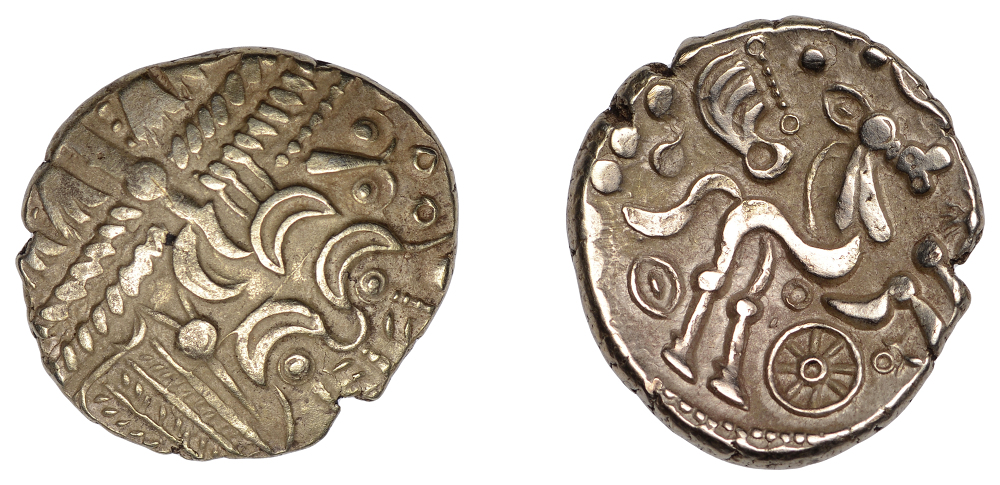
A gold stater of the Belgae is arguably the finest known, commanding expectations of £4,000-5,000. It shows a devolved head of Apollo on the obverse with two hidden faces, and a horse standing right surrounded by Celtic motifs, including a sun, a wing and an eight-spoked wheel, on the reverse.
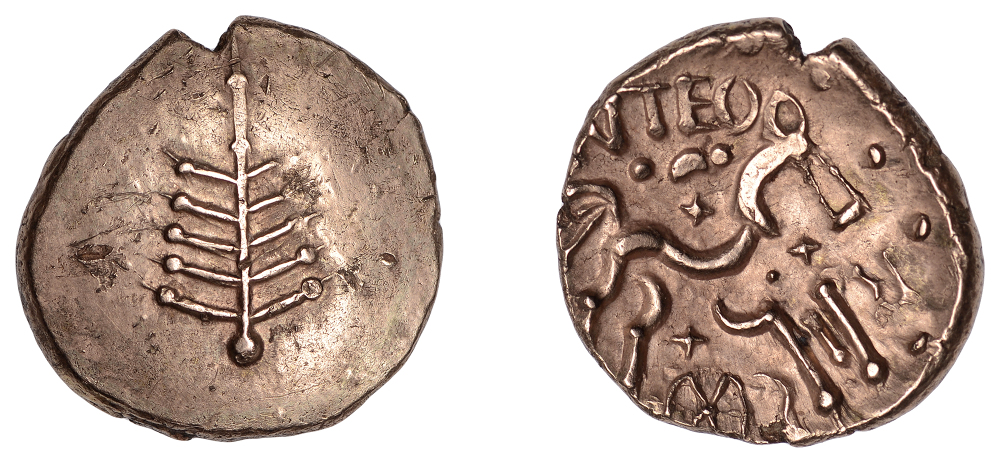
Two lots from the Dobunni tribe, each featuring the Dobunnic tree emblem on the obverse, and a triple-tailed horse surrounded by crescents and stars on the reverse, come with their respective rulers’ names, Corio and Anted, inscribed above. The first is expected to fetch £600-800, and the second £1,000-1,500.
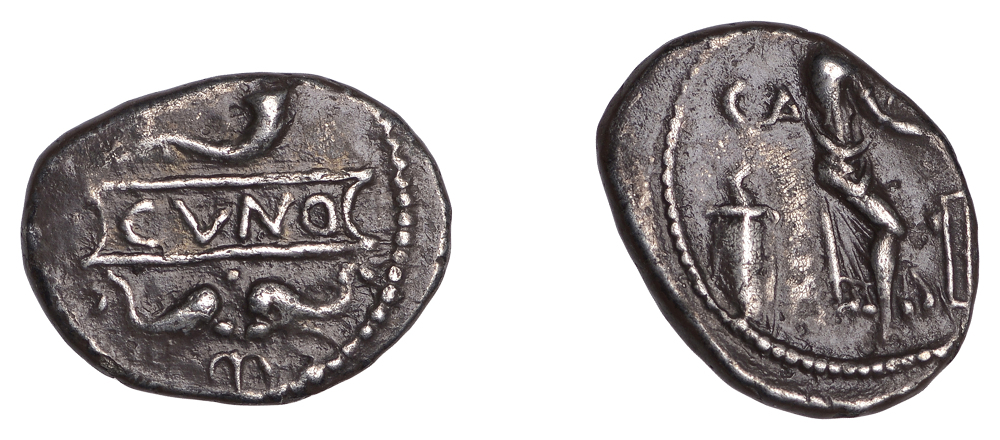
Later coins of the period include a Catuvellauni and Trinovantes silver unit of Cunobelin (c.8-41 AD). The cricket type, with cvno in tablet, with cornucopia above and dolphins below, the reverse shows a figure standing right with an altar in front and behind and the letters ca mv to either side. Struck on an oblong flan, with dark toning, it is excessively rare and very fine, and comes with a guide of £300-400.
The collection also includes coins of the Continental Iron Age, showing the story of the stylistic influences from Ancient Greece and Rome to their Celticised descendants stretching all the way across ancient Gaul.
Share This Page