Article
26 October 2025
BANK OF ENGLAND RARITIES SOAR AS RARE INTERNMENT CAMP NOTES MAKE THEIR MARK TOO
A long list of highlights for this sale was capped by two standout lots from among a wide range of Bank of England notes.
As fascinating was the selection of Second World War Internment camp notes, which also performed well, in part thanks to the rediscovery of a 1983 article that lists the number of every single camp, along with its name and location. “This really seemed to capture the public interest, with bidders seemingly attempting to get a note from their local areas,” said Noonans’ Head of Banknotes Andrew Pattison.
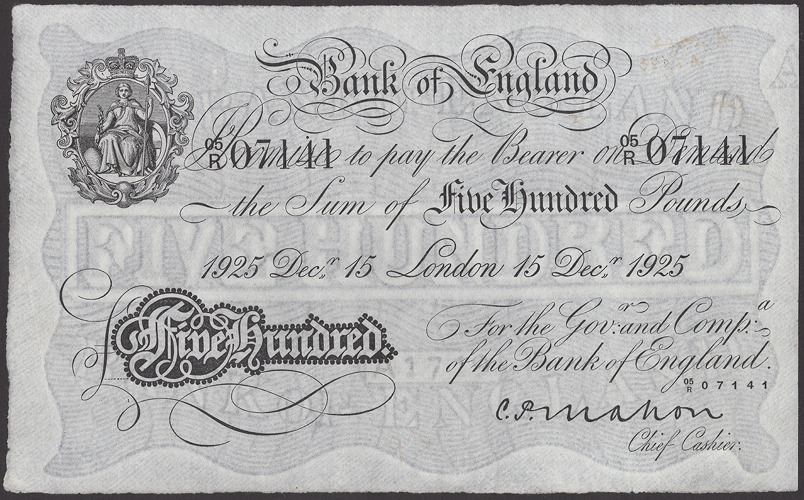
The first of the two outstanding Bank of England notes was a magnificent £500 issued from London, and dated 15 December 1925. Signed by Cyril P. Mahon, it was overall a fresh and attractive very fine and an astonishingly rare high denomination, with only four examples known to exist. With hopes of £20,000-26,000, it sold for £30,000.
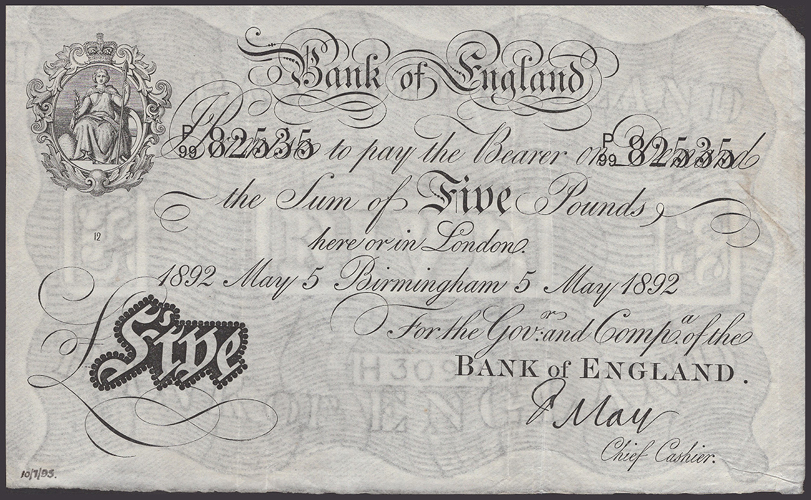
The £5 note dated 5 May 1892 and signed by Frank May displayed astonishing paper quality. In good very fine condition, it was almost certainly unique in private hands. With the same estimate, it took £24,000.
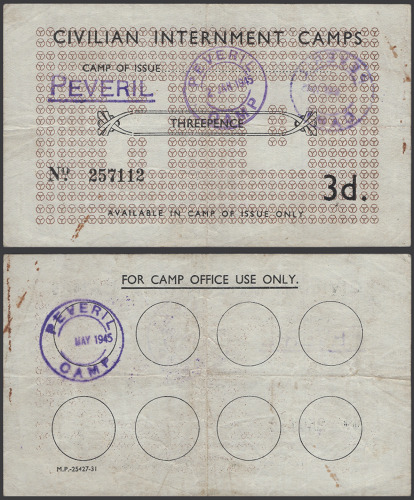
Pick of the Internment camp notes was a 3 Pence note for Peveril Camp, serial number 257112, stamped on the obverse for 2nd January 1945 and on the reverse [for office use only] for May 1945.
Peveril was a civilian internment camp in Peel, Isle of Man, opened in summer 1940 and housing about 800-900 German and Austrian internees in the boarding houses on Marine Parade (on the promenade) and on Victoria Terrace/ Peveril Road.
It closed in spring 1941, reopening in May that year to house British Fascists and security risk detainees including Norwegian and Dutch refugees who had fled occupied Europe. The British Fascists sparked a large-scale riot, while several escape bids failed.
In fresh and original condition bar a few rust marks, this extremely rare note rose past its £800-1,000 estimate to sell for £1,400.
An unstamped civilian internment camp note for two shillings and sixpence took £1,300 against an estimate of £600-800.
Share This Page