Article
29 January 2026
FARMHOUSE FIND AN OBJECT LESSON IN HOW TO READ A HOARD
The Littlebrook Hoard is an object lesson in the wealth of historical detail that can be read from such finds and the circumstances of their discovery.
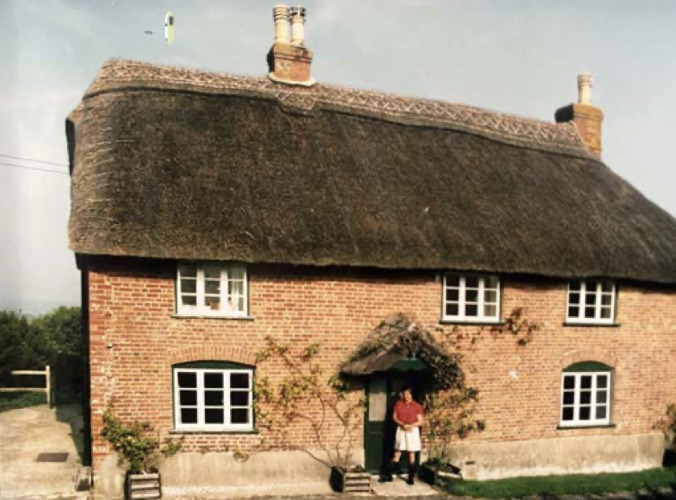
It came to light in 2004 as builders set about constructing a new extension to Littlebrook Farm in Belchalwell Street, near Blandford Forum in Dorset. Breaking up a concrete pad used for car parking at the end of the farmhouse, they found a pottery vessel containing 213 coins.
With 13 coins eventually passing to the Dorset Museum, the remaining 200 come to auction here on behalf of the owner of the farmhouse, Peter Gray, who is now moving with his wife Jackie to a new home. Most date to the reign of Henry VII (1485-1509) and the combined estimate is around £30,000.
So what is the story behind them?
Peter himself says: “Who they belonged to, we don’t know, but the cottage isn’t too far from the Dorset Gap which was a route that linked the South Coast to Dorchester and Salisbury, so it is possible that they were hidden by a smuggler!”
Noonans’ Coin Specialist Jim Brown adds: “The fact that the coins were discovered in a container is clear evidence that they were deposited on a single occasion and they represent a selected body of higher value silver coins from the currency of the early 16th century, before the new weight standard of 1526 was introduced. The earliest coin recorded was a half groat from the reign of Edward III, dated c.1351-2, and the latest a half groat issued from York after Wolsey was appointed bishop in 1514. The coins are thought to have been deposited probably c.1514-1520.”
He added: “The pottery jug, which sadly was broken during the lifting, is of simple design with a crimped edge and was confirmed by the British Museum as dating from the late fifteenth century and originating from the Ruhr area of Germany – this is also at the Dorset Museum.”
Most British medieval coin hoards tend to contain only the larger denominations in circulation, the smaller coins being deliberately excluded by the saver. These are referred to as ‘savings hoards’. On the other hand, deposits of the contents of a purse or pocket will contain the small denomination coins which circulated on a daily basis – these are often called ‘circulation hoards’ or ‘purse finds’.
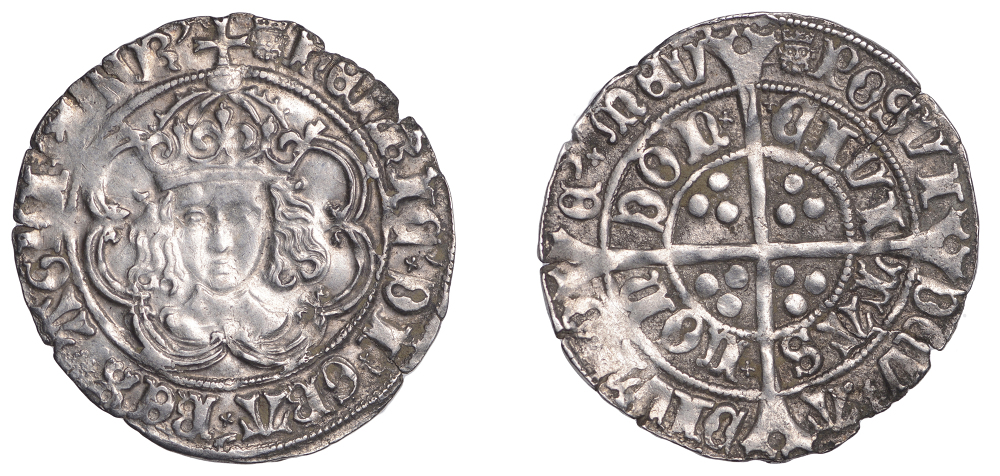
Numismatically, the Littlebrrok find is a savings hoard and represents a typical selection of coinage of the period. It seems to be an amalgam of two distinct groups. The earlier group comprises 12 coins struck between 1465 and 1478. Although they are not in as good condition as the later coins, their comparative lack of wear points to them having been set aside some years before the final deposit. The balance of 188 pieces dates from c.1498-1515. Two coins issued during the intervening 20 years or so now rest with the Dorset Museum.
“While it is not surprising that the rare issues of Richard III are not present, the dearth of the earlier types of Henry VII (Potter & Winstanley I, II, IIIa and IIIb) is a little puzzling and probably points to the deposit being from two discrete sources,” says Jim Brown.
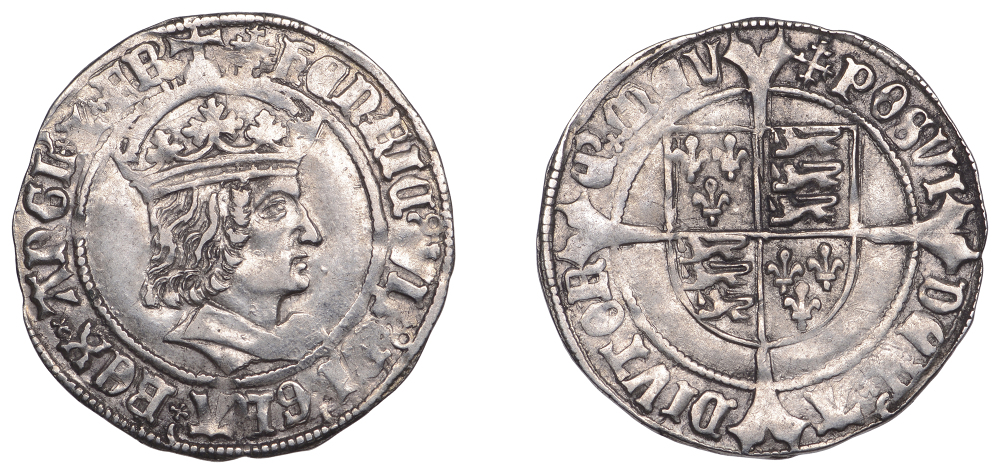
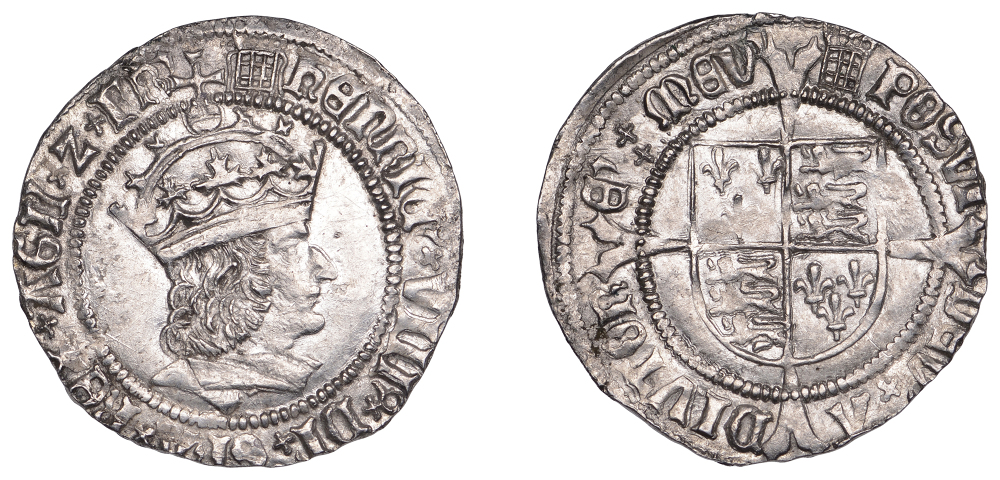
The bulk of the Henry VII coins carry the cross-crosslet and pheon mintmarks, the former of which was introduced in the spring of 1504, helping to pinpoint the date more precisely. The transition from facing to profile bust type – a complex sequence of issues, some experimental, including facing bust, tentative and regular profile coins, spanned a busy 18-month period during 1504-05.
In the new reign, the ratio of coins of different mintmarks and their overall relatively unworn condition suggests the hoard was deposited no later than c.1520.
Highlights include five rare coins that all date from the reign of Henry VII. A Tentative issue Groat with an excellent portrait carries an estimate of £400-500; while a Groat with double mintmark (cross-crosslet and pheon) on reverse is estimated at £300-400; and from York, an extremely rare Halfgroat is expected to fetch £200-300. Also of note is a Groat with mintmark pheon which is estimated at £200-300 and another with mintmark portcullis over T that is expected to fetch £300-400.
Share This Page